
How to Prevent Foundation Water Damage at Home

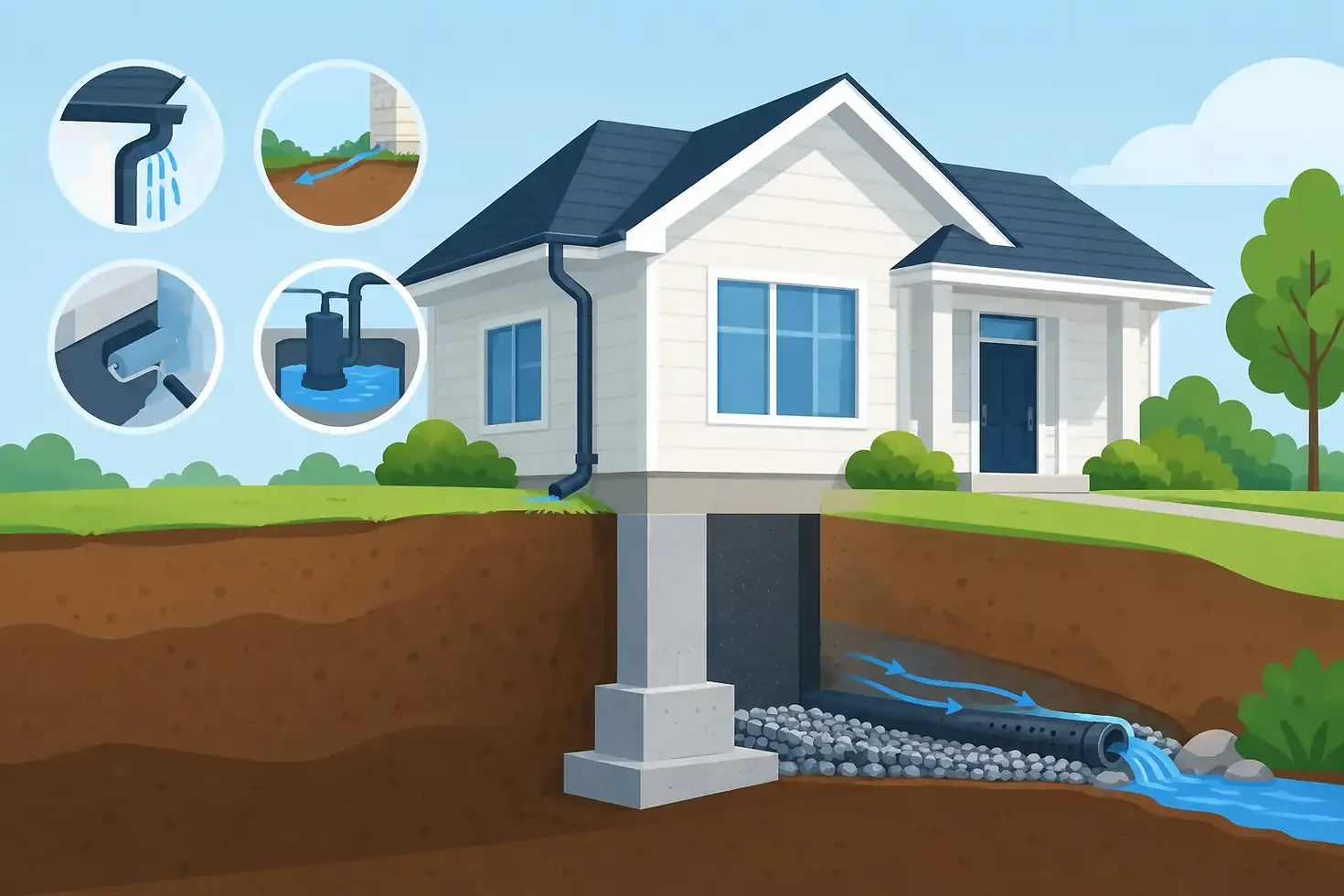
A hard rain can reveal a drainage problem in less than an hour. Water spilling over a clogged gutter, pooling beside a basement wall, or pouring from a downspout too close to the house can all put unnecessary pressure on your foundation. To prevent foundation water damage, the goal is simple: collect roof runoff, move it through the gutter system, and release it well away from the home.
For homeowners across Whitby, Oshawa, Toronto, and the surrounding GTA, that job is especially important during spring thaw, summer storms, and fall leaf season. Foundations are built to handle normal moisture in the soil. Problems begin when large amounts of water repeatedly collect beside the same wall with nowhere else to go.
Why water near the foundation becomes a problem
When the soil around a foundation becomes saturated, water can work its way through small cracks, joints, window wells, and other vulnerable areas. Repeated wetting and drying can also contribute to soil movement. In winter, trapped moisture can freeze and expand, adding another layer of stress around the foundation.
The first warning signs are not always dramatic. You may notice damp patches or a musty smell in the basement, white mineral marks on concrete, peeling paint near the lower walls, or puddles that linger long after rain has stopped. Outside, soil washed away beneath a downspout or water sitting beside the home deserves attention too.
A wet basement can have more than one cause. Plumbing leaks, poor grading, cracks, and drainage issues may all play a part. Still, roof runoff is one of the most manageable places to start because it sends a surprising amount of water toward the ground during every storm.
Keep gutters clear so water follows the right path
Gutters are not just a finishing detail along the roofline. They are the collection channel that keeps rainwater from dropping directly beside your walls. When leaves, shingle grit, seed pods, and other debris build up inside them, water can back up and spill over the front or rear edge.
That overflow often lands in a concentrated strip beside the foundation. Over time, it can erode soil, damage landscaping, stain siding, and create the kind of repeated saturation homeowners want to avoid.
A visual check after heavy rain is useful. Look for water cascading over the gutter edge, gutters sagging under standing water, or one section that appears to drain more slowly than the rest. You can also watch for water marks beneath the gutter line. These are practical clues that the system needs attention.
For many homes, gutter cleaning in late spring and again after most leaves have fallen is a sensible starting point. Properties with mature trees, pine needles, or nearby construction dust may need more frequent service. The right schedule depends on what lands on the roof, not just the calendar.
Check for damage while the system is clean
Cleaning removes debris, but it also makes repairs easier to spot. Loose hangers, separated joints, rusted sections, holes, and incorrect slope can stop water from reaching the downspout even when the trough looks clear.
A gutter should slope gently toward the downspout. It should not hold long stretches of standing water after a storm. Small repairs completed early are usually simpler than waiting until a loose section pulls away from the fascia or overflow begins affecting the foundation area.
Make sure downspouts actually carry water away
A clear gutter is only half of a working drainage system. Downspouts must accept the flow and carry it safely to the discharge point. If a downspout is blocked, water may spill from the gutter at the top, leak at a joint, or back up along the roof edge.
After a rainfall, check that water exits from every downspout. A slow trickle during a steady rain, or no flow at all, can point to a blockage. Debris often collects at elbows, lower bends, and connections where the downspout meets an extension.
The discharge location matters just as much as the flow. Water should be directed away from the house onto an area that slopes away from the foundation. A downspout that empties directly beside the wall can undo the good work of the gutter above it.
Extensions are a straightforward solution for many properties, but they need to be positioned with care. They should not create a trip hazard, interfere with walkways, send water toward a neighbour's property, or discharge where it will freeze across a path in winter. On tight urban lots, drainage choices may need a more tailored approach.
Improve the ground slope around your home
Even a clean, properly functioning gutter system cannot compensate for ground that slopes toward the house. The soil around the foundation should generally guide surface water away from the walls. If rainwater naturally runs back toward the home, it will collect exactly where you do not want it.
Walk around the property after a storm. Notice where puddles form and whether they drain within a reasonable time. Pay close attention to garden beds, walkways, patios, and areas where landscaping has settled over the years. Mulch, decorative stone, and soil added near the house can gradually change the slope without homeowners realizing it.
Correcting grading may mean adding and compacting suitable soil, adjusting a garden bed, or addressing a sunken area beside the foundation. Larger drainage concerns, especially those involving major settlement or persistent basement moisture, may require assessment by a qualified drainage or foundation professional. It is better to identify the cause than to cover up a recurring symptom.
Do not overlook roof and gutter guard details
Water damage prevention starts at the roofline. Damaged shingles, missing flashing, or ice buildup can allow water to enter places it should not. While these are separate from foundation drainage, they can create moisture problems that are easy to confuse with basement or grading issues.
Gutter guards can reduce the amount of leaves and debris entering a system, particularly on homes surrounded by deciduous trees. They are not a promise that no maintenance will ever be needed. Fine debris, roof grit, and material resting on top of the guards can still affect water flow. The value of a guard depends on the roof design, nearby trees, and the type of debris common on the property.
A properly selected and installed guard can make routine cleanouts less frequent, but it should still be inspected during seasonal exterior maintenance. If water runs over the guard instead of into the gutter, the system needs adjustment or cleaning.
Seasonal checks that help prevent foundation water damage
The most useful maintenance is often done before the next storm exposes a problem. A short seasonal walk-around can catch issues while they are still manageable.
In spring, clear winter debris and make sure downspout extensions are connected after snow and ice have passed. Check for water pooling from thawing ground and inspect areas where snow was piled close to the home.
During summer storms, watch the gutters in action from the ground. Overflow, leaks at corners, and weak downspout flow are easier to identify when water is moving through the system.
In fall, remove leaves before they compact into dense, wet material. This is particularly important before freezing temperatures arrive, when blocked water can contribute to ice buildup and extra weight in the gutters.
Before winter, confirm that discharge points will not direct water onto driveways, front steps, or walkways where it can freeze. A drainage system should protect the foundation without creating a safety issue elsewhere on the property.
Know when to bring in a gutter professional
Gutter work can be dirty, awkward, and risky, especially on two-storey homes or properties with steep ground. It is wise to arrange professional help when gutters are difficult to access, downspouts are repeatedly clogging, sections are loose or leaking, or you are seeing regular overflow near the foundation.
A thorough service should do more than remove visible leaves. It should restore proper flow through gutters and downspouts, identify obvious repair concerns, and leave the drainage path clear. For homeowners who prefer dependable seasonal care without climbing ladders, a recurring maintenance plan can make sense.
ADL Gutters helps local homeowners with gutter cleanouts, downspout flow restoration, repairs, and gutter protection designed to keep water moving where it belongs. Clear explanations and careful work matter because a small drainage issue can become an expensive distraction when left through several seasons.
The best time to deal with runoff is before the next heavy rain. A quick look at your gutters, downspouts, and the ground beside your home can provide the reassurance that water has a clear route away from your foundation.


Comments